Japan (vi): Kyoto & (Temple) Fatigue (Day 5-6)

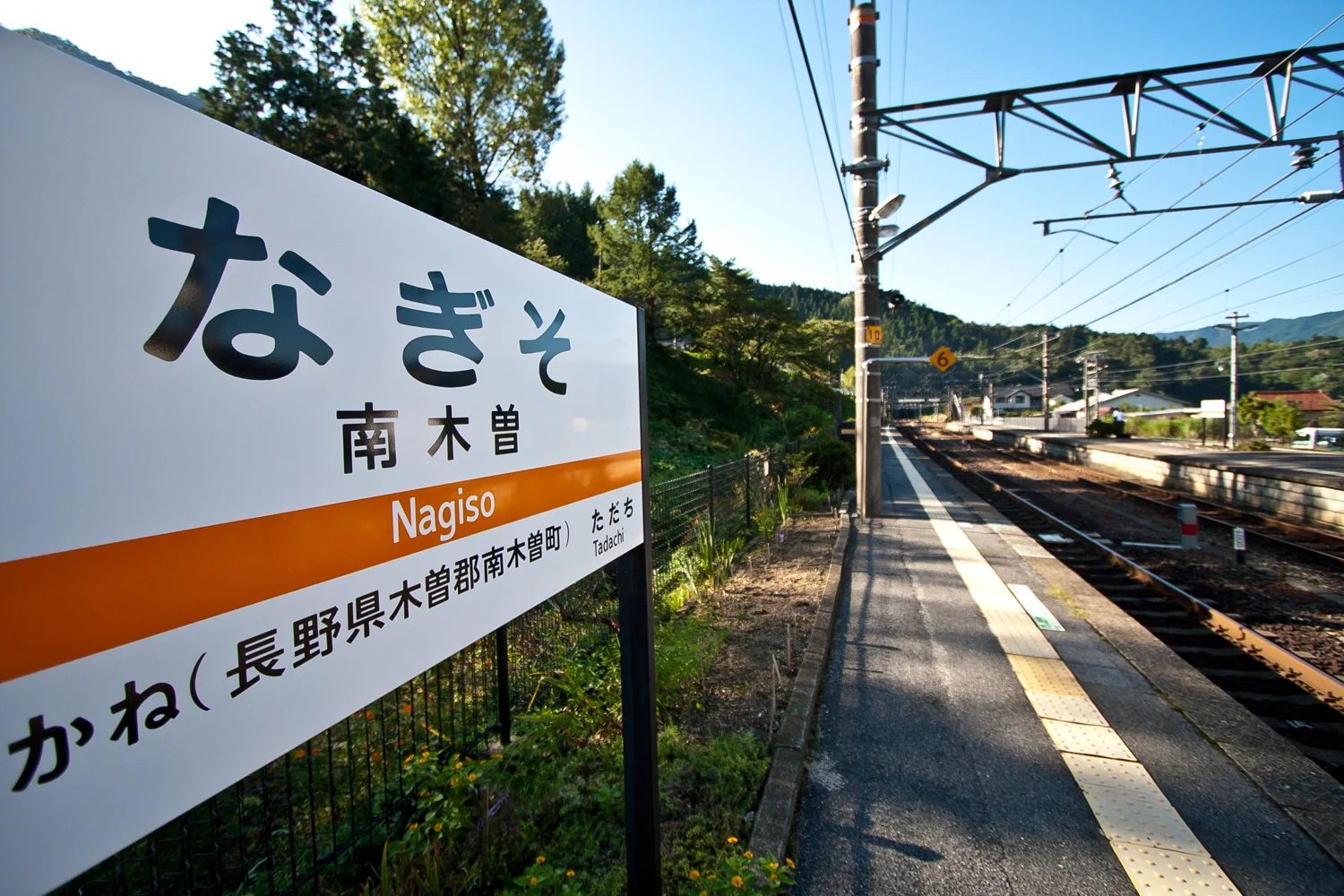
The sun was just creeping over the mountains surrounding the Kiso Valley as I woke up that Thursday (September 13) morning. I had since become used to the prevailing caws of crows and did not find the absence of song birds at dawn out of place. I sat up as dusty beams of light slanted through the open window and took some time to chronicle the previous days in my notebook. At 6:30 am, I heard a bell toll somewhere in the distance, but not a traditional bell. It was a series of electric tones mimicking the peal of a metal bell. It was odd, but somehow perfectly appropriate. Shortly after 7 am I went downstairs to find my host waiting outside with his small van. The night before, he had offered to drive me to the Nagiso train station in the morning to save me another 3km walk. He greeted me with a small, tied off plastic bag and just one word, "bento." He smiled as I took it and motioned for me to get in the car. Once at Nagiso Station, I waited for about half an hour in the warming sun while waiting for the train to Kyoto. I opened the small bag to find a banana, packaged sweet roll, and small coffee beverage. I savored these on the quiet, deserted platform.

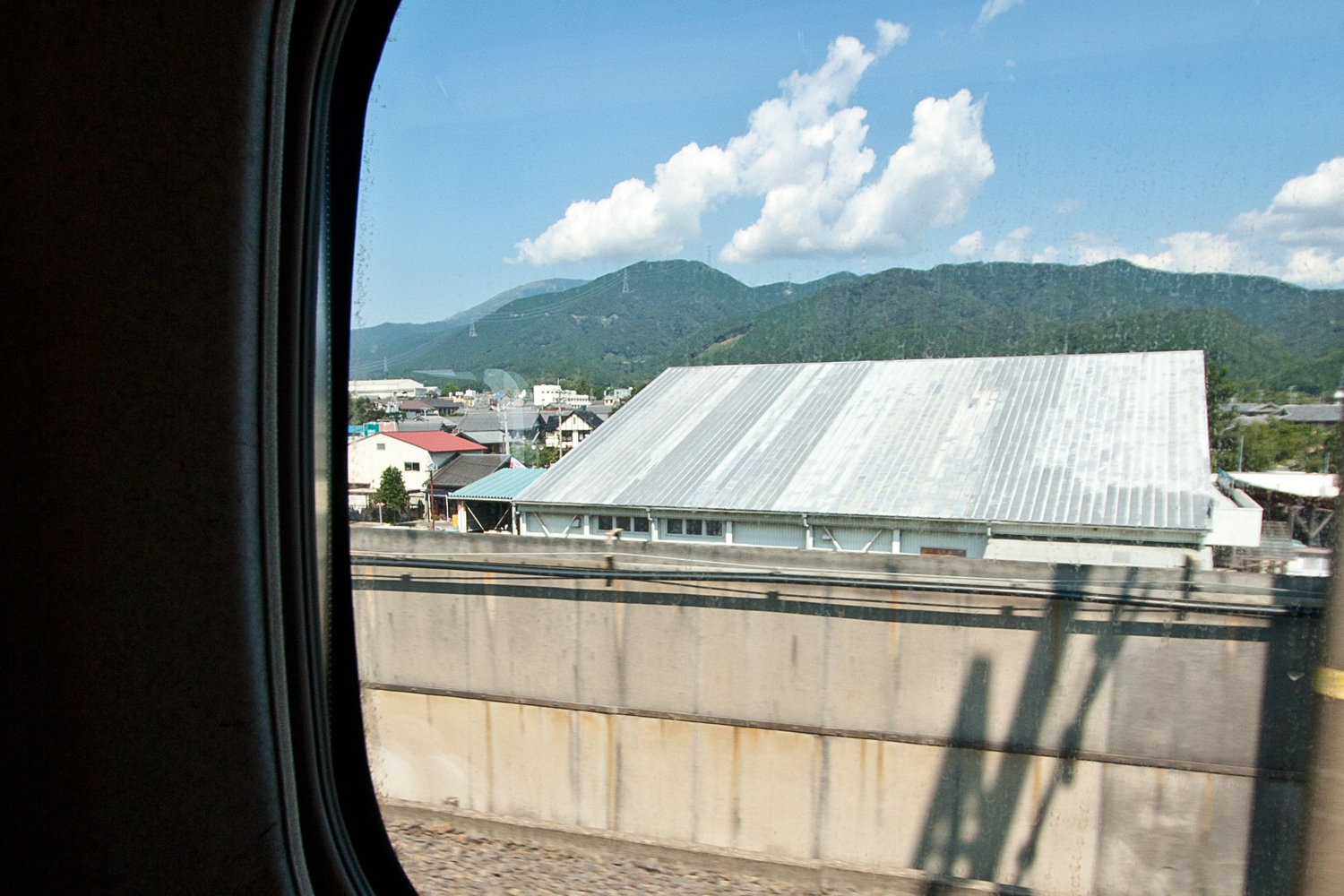
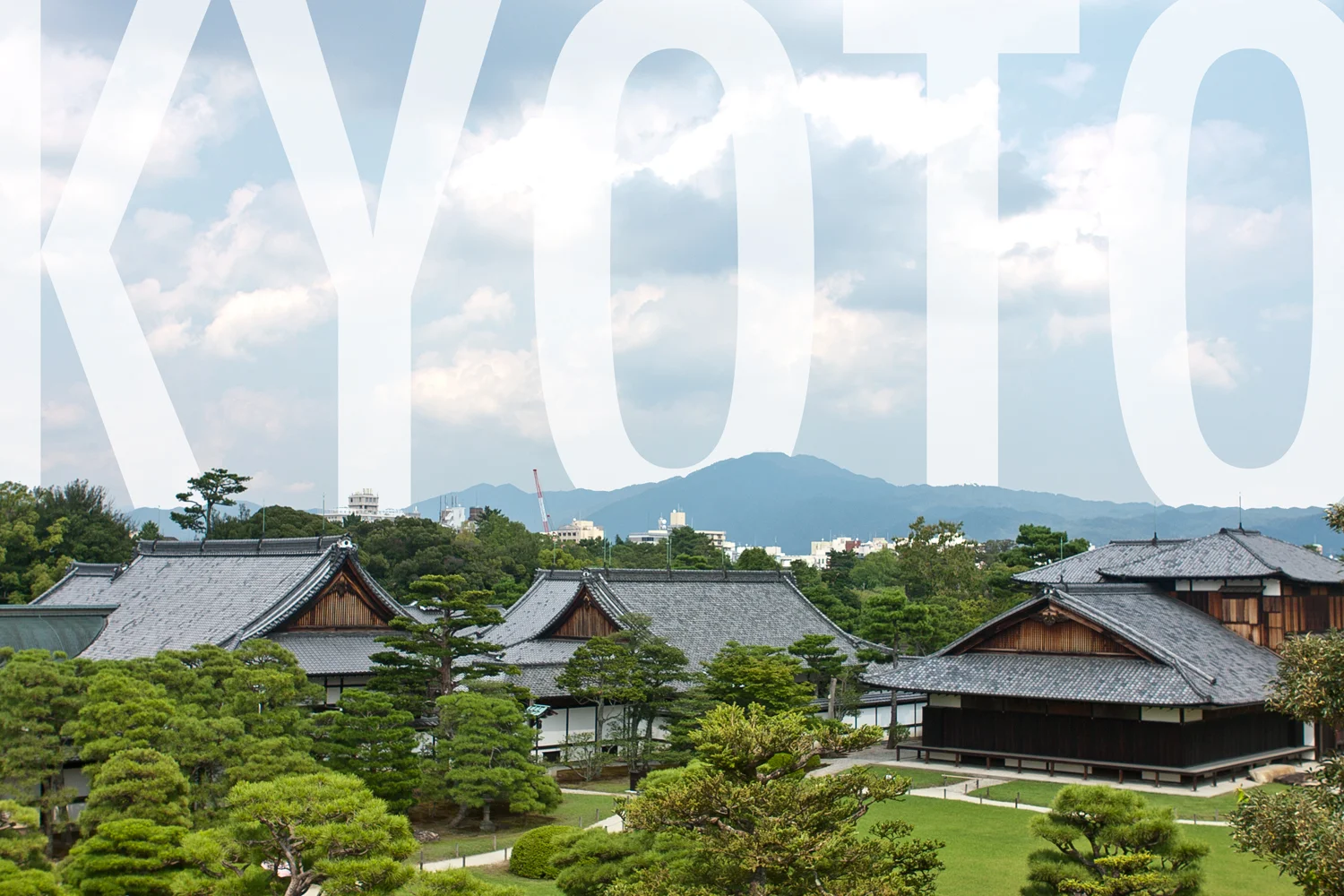
While looking back on my photos from Kyoto, one of the clearest memories was of just how tired I was at this point. While the hike in the Kiso Valley was peaceful, it was also tiring. And after three hard days in Tokyo, I hadn't had much time to recover my strength. As a result, I took fewer shots in Kyoto than I should have. Some of the shots in this post were actually culled from my phone to compensate for gaps. This was also slightly exacerbated by "temple fatigue." I had read and heard that this happens to visitors to Kyoto. Once I had seen a couple of the major temples and castles, my desire to see anymore dropped precipitously. I arrived in Kyoto at around noon and, after situating myself at the hostel, I rented a bike and set out on an ambitious route hitting five or six sites. I only made it to two. I started with Nijo Castle and the Golden Pavillion. Both were famous and impressive, but it became very much a "seen one, seen them all" case. So I spent the rest of the day riding my bike aimlessly around the city.

One thing I did notice all around Japan, and most prominently in Kyoto, was that there are Japanese tourists everywhere. I found that a little odd because I'd have expected most people in Japan would have seen everything in Kyoto already given the ease of access via rail. Everywhere I went there were hordes of picture taking, ridiculously posing Japanese tourists. It was strange for me, coming from a town where tourists are so reviled by locals.
The bike was a very welcome change. My feet and shoulders needed a break. I deposited my backpack in the basket and just cruised around Kyoto's streets at my leisure. Some people are aware that I tend to sing in the car a lot. I found myself absentmindedly singing while biking around. More than a few people turned to look at me quizzically. I imagine the American tourist speeding by, singing in English is not a normal thing. At one point I had gotten myself sufficiently lost, but managed to find an older woman to take a look at my map. She kindly pointed out that I was actually about 50 feet from where I was supposed to be and I was just an idiot.

That evening I went to another ramen shop that I had read about, Men Baka Ichidai. I hadn't planned on eating ramen in Kyoto ahead of the impending ramen binge in Fukuoka, but I read about Men Baka Ichidai and their famous Negi Ramen and decided I had to try it. The Negi is a shoyu ramen, but the twist is that it's set on fire before serving. When ordered, the chef and his apprentice begin covering the counter with wet towels and hand you a paper apron to cover yourself with. The chef stood in front of me and presented me a series of cards with English on them instructing me not to: a) get up, b) make a fuss or scream, and c) touch the bowl for five minutes. He then proceeded to pour a giant flaming plume of hot green onion oil all over the bowl. The end result is a slightly smoky, greasy bowl of shoyu ramen that was quite tasty, though it didn't quite taste as explosive as one might have expected. I also took a video with my phone of another couple's Negi Ramen (see it here). I held my phone in my left hand and my SLR in my right hand, trying to stay very still. Please try to imagine how much of a doofus I looked while double-fisting my gear.

The next day, I took the train out to the outskirts of Kyoto. I had planned on visiting the famous Arashiyama foot bridge and bamboo path. When I got off of the train, I consulted a map posted outside the station and set off on what should have been a 10 minute walk. Now is the best time for me to explain that all of the maps in Japan are oriented in the direction that you face while reading them. A map facing east will have a compass with north pointing to the left. This confused me, but I had done a good job of correcting for this up until this morning. The map outside the Arashiyama Station turned me around and I went north when I should have gone south.

What followed was two hours of wandering around a rural farming village, convinced I was going the right way. Several people I consulted even pointed me in the wrong direction, confusing me even further. Nevertheless, it was a pleasant morning detour. At some point, I was overtaken by a procession of uniformed school children walking to a nearby middle school. It was interesting (in the least perverted way possible) how some of the girls wore their skirts the full length, while others rolled them up to more provocative lengths. When I finally arrived at the bridge, the morning was gone and I had more or less lost any interest in its significance. To be fair, it was quite idyllic and there were cormorant fishermen just down the river. I then went to the famous bamboo path and lasted maybe 10 minutes there. It was more or less just an asphalt paved path surrounded by sparse bamboo on either side. I confess I didn't even make it down the entire length of it. I took a few shots and headed back to the train station. The walk back took me all of seven minutes. Some detour. Then I came across an adorable troop of elementary aged school children. They all looked like little Japanese cartoons.

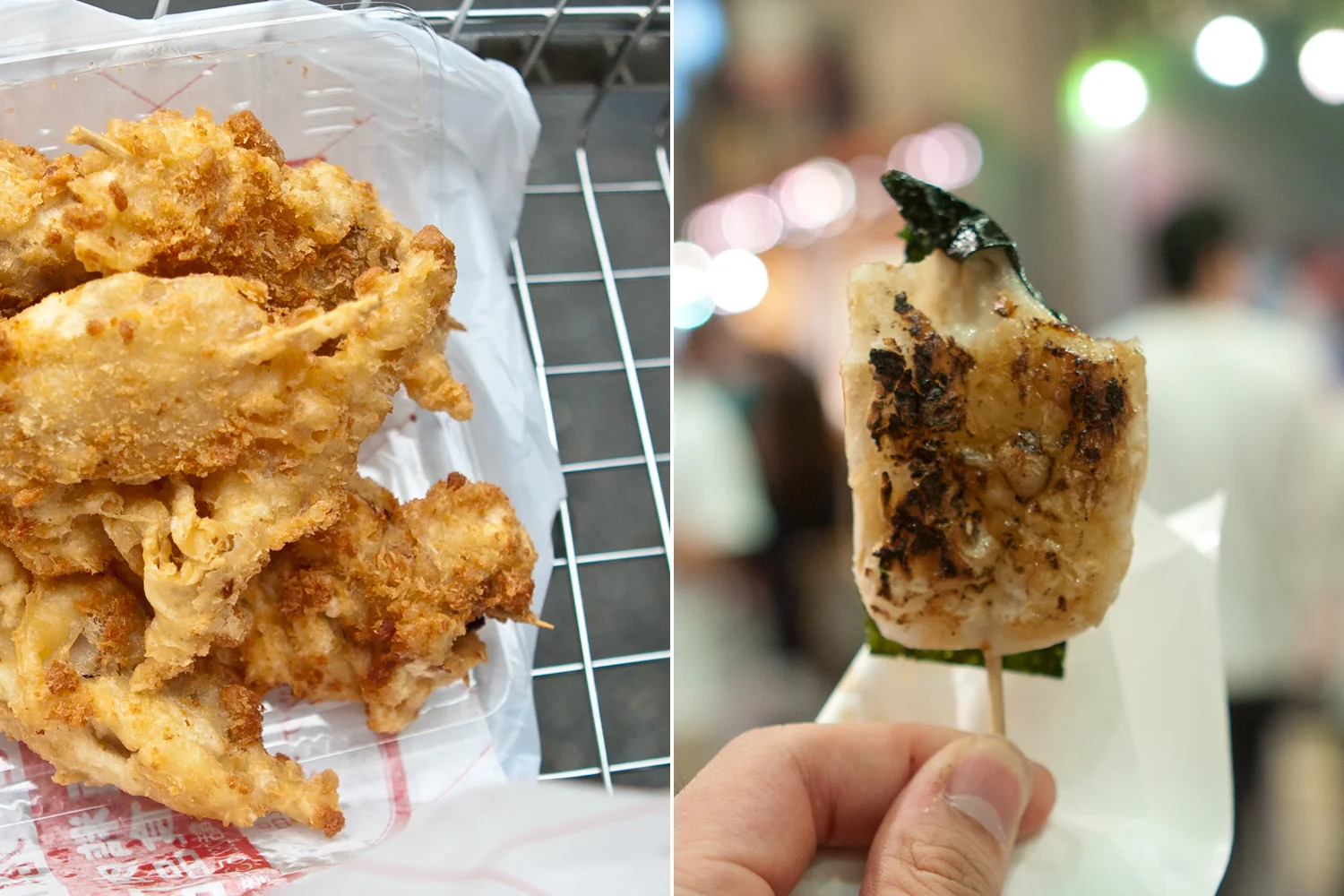
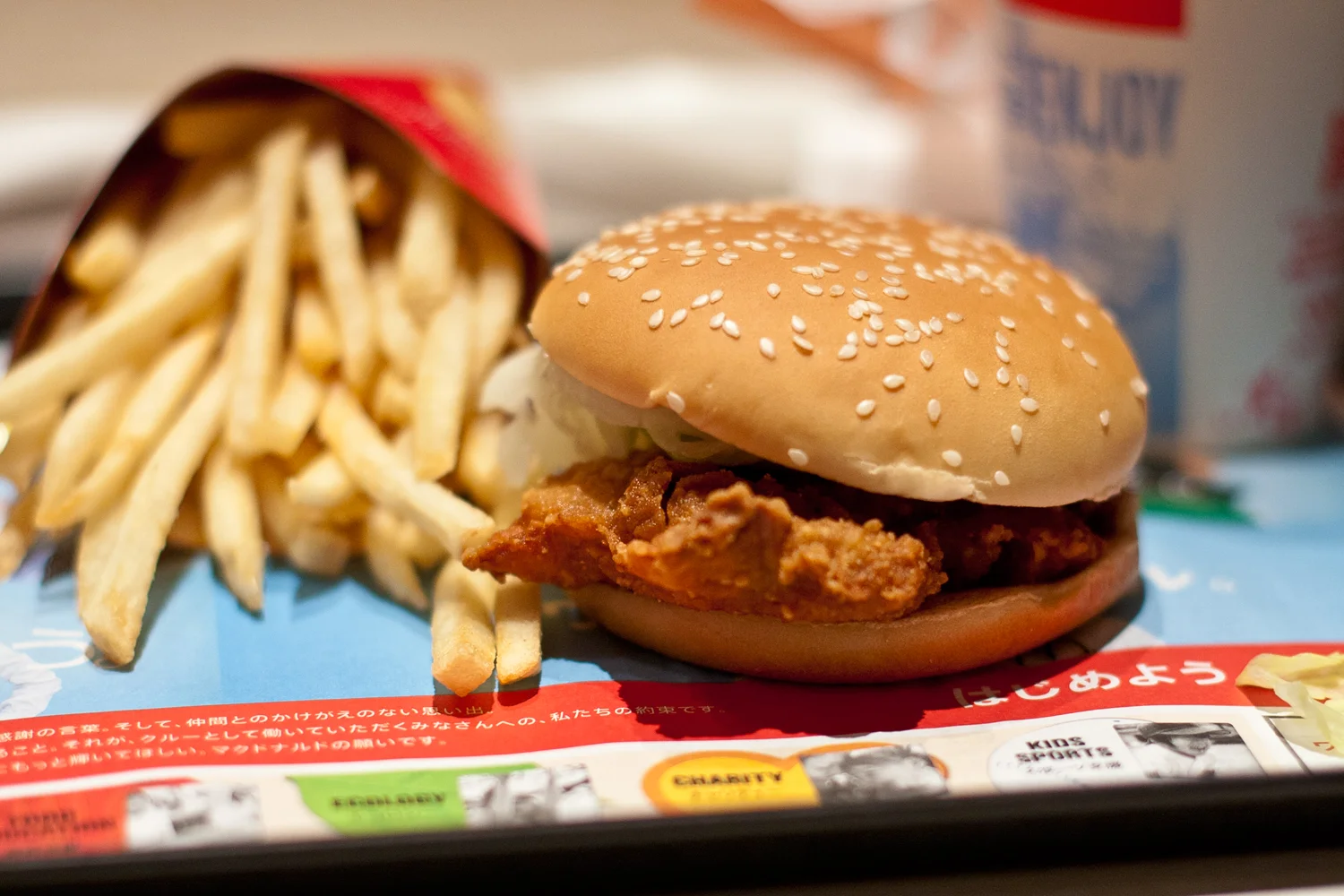
Back in central Kyoto, I grabbed lunch at the Nishiki food market. A famous stretch of covered alleys lined with small food vendors selling everything from fresh fish to cooking knives. I got an overflowing container of deep fried beef and onion skewers for $3. A coal grilled rice cake (dduk for the Koreans) skewer that's served with a swipe of soy, sesame sauce and a sheet of seaweed. And a bunch of other small, cheap things. Then it started raining, so I retreated to the hostel for a bit. When it looked like it was going to die down, I tried biking to the Fushimi Inari Shrine (the famous site of the trails covered by red gates), but it started pouring halfway there. I turned back after waiting under a covered bus stop for a bit to see if it would stop. When it didn't, I returned to the hostel with an excuse to do nothing and just spaced out for a bit. Then, with little energy to seek out something notable, I just ate dinner at a nearby McDonald's. It was surprisingly good. The chicken looked like chicken.

The next morning I left Kyoto knowing that i hadn't particularly seen and done as much as I could have, but not really regretting it. I was going to be eating a lot of awesome ramen later that day, so I wasn't worrying about seeing more temples.

Japan (v): Magome & Tsumago (Day 4)

By the time I left Tokyo, I was at the point of sensory overload and really needed to slow down a bit. Early Wednesday (September 12) morning, I got on my first shinkansen (bullet train) and left the city. The shinkansen is really a great way to travel. The seats are comfortable and there's plenty of leg room. The train is incredibly smooth and fast. Watching the city melt away into open fields and mountains was very calming. The one thing about getting on the high speed rail, though, is that there was always a small element of fear that I was on the wrong train. If I was, I'd have committed to a multi-hour mistake. So sleeping on the trains was intermittent because I would keep just awake enough to hear each stop called. Luckily I always got on the right train.

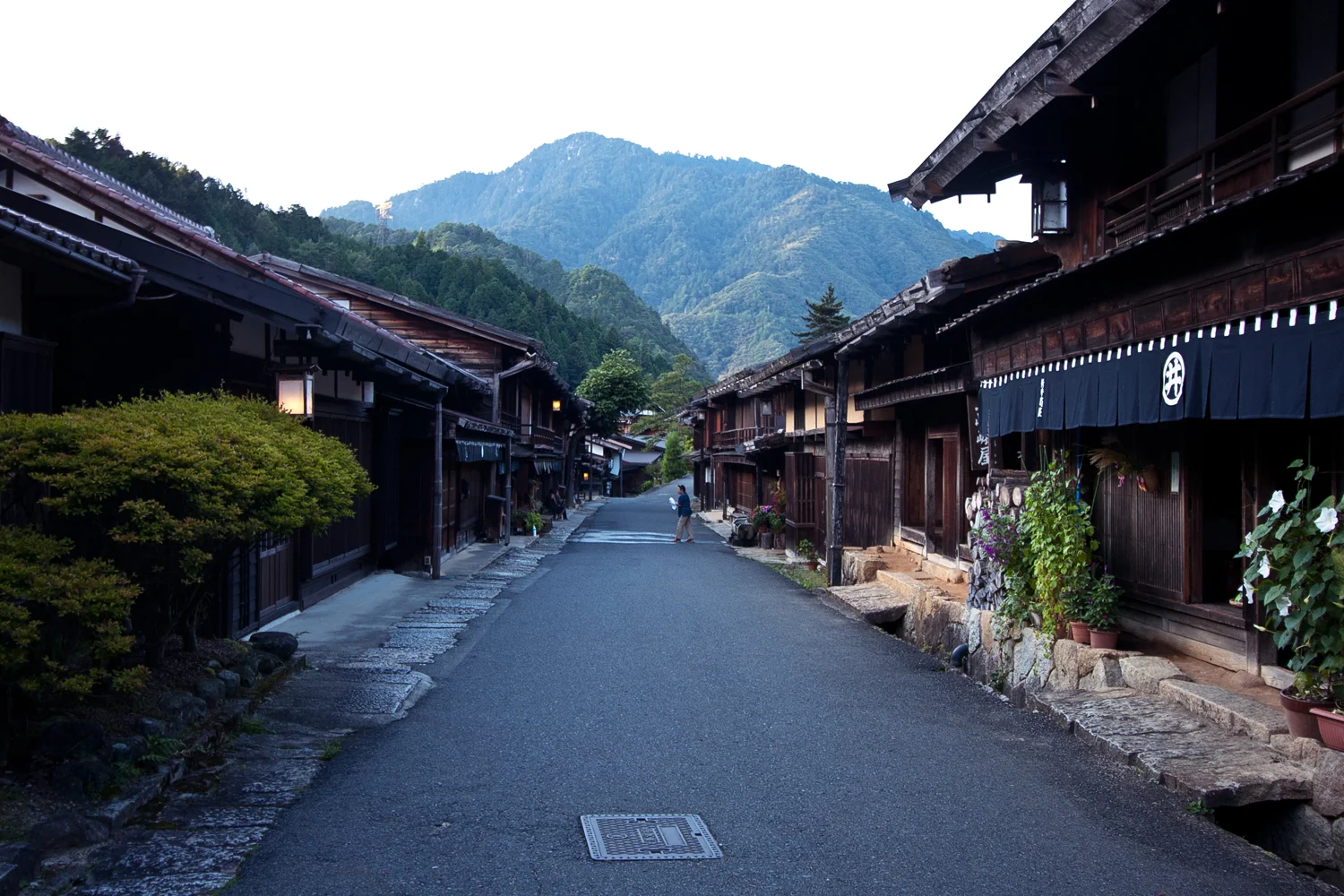
After a few hours, I arrived at a small town at the base of the Kiso Mountains called Nakatsugawa. From the train station, I caught a bus that ferried people up the mountain, with frequent stops along the way, that ultimately brought me to Magome. Magome is a historic postal town that served travelers during the Edo period between Kyoto and Tokyo. It's been restored and preserved to recreate the feel of the period. The town is basically a small stretch of cobbled road lined with historic buildings, many of which have since been turned into souvenir and snack shops.

Magome lies at one end of a trail that runs along the Kiso Valley and ends at another post town, Tsumago. There's a luggage transport service for tourists that delivers your bags to the opposite town if you're doing the hike, but only if you arrive before 11:30 am. Unfortunately I arrived a bit after noon. Knowing I was too late, I approached the tourist information center anyway. The thought of hiking the 5 miles with my backpack and my duffel was not appealing. Of course the truck had already left, but the middle-aged woman manning the desk was extremely helpful. Not only did she offer to deliver my bag in her own car, she also made lodging arrangements at a ryokan (traditional inn) in Tsumago for me that evening (I hadn't made any reservations). I was extremely relieved and grateful and spoke a lot of English to her that she probably did not understand.

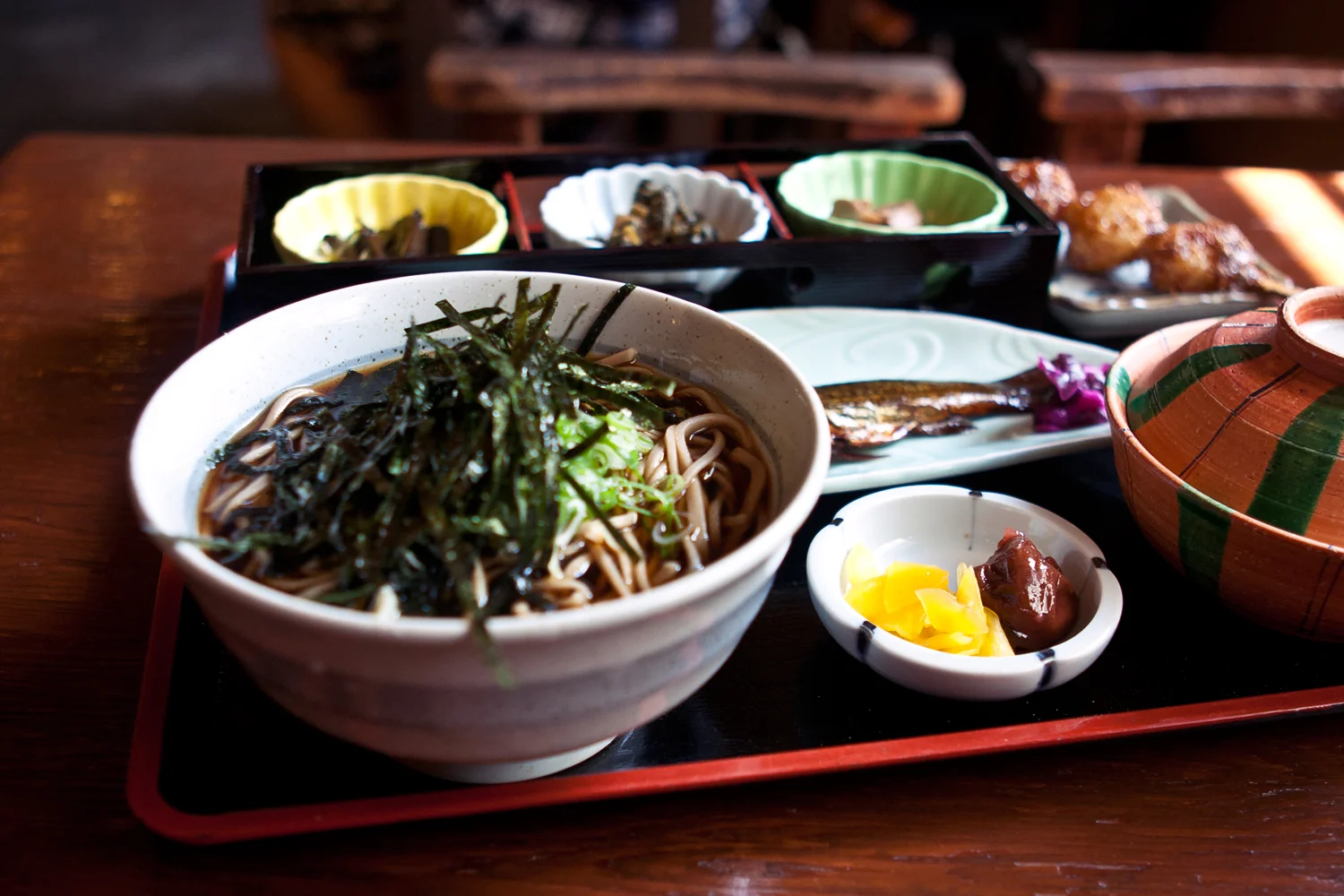
Relieved of the dreadful prospect of the burdened hike, I wandered up and down Magome for a bit. I admired the historic feel of the place. Save for the tourists in fannie packs and incessantly flashing point and shoots, it wouldn't have been out of place to have seen samurai walking up the road. Not only that, the surrounding mountains and valleys were breathtaking. Bright green and yellow fields painted the landscape beneath the azure expanse blotted with large, fast moving clouds. I also followed a uniformed mailman on a scooter with my camera while he delivered mail for a bit. It seemed only natural to capture a modern postman in an historic post town. An hour or so later, I found myself at a small soba shop, Magomechaya. I had warm soba with rice, fish, and some other small plates. I drank tea and wrote in my Moleskine for a bit before setting out on the trail to Tsumago.
The trail began with a kilometer or so through a small rural village in the mountains. I walked by small cottages surrounded by neat plots of crops and reservoirs. The road had a small canal running alongside it. As the water ran down hill, each home had crafted a makeshift dam to pool and divert water for their own supply. It was interesting to see how each home crafted their own mechanism. The water was crystal clear and glacier cold. More than a few times I stopped to dip my hands in it and splash my face and neck.

The simplicity and quiet I observed in these villages was hypnotic. It was so easy to forget the world outside of that place. Tokyo seemed a world away. America, work, and home weren't real. I stopped on the road to watch an elderly woman insert seedlings in the earth. A couple of houses down, a graying man worked on the tire of his bicycle. The sound of my shutter seemed to intrude on the dense stillness there. I felt almost embarrassed to be intruding.

As the trail entered more wooded areas, I would find small shrines off of the path at odd locations. There were bells placed every kilometer or so meant to be rung loudly to ward off bears. I passed by a pair of waterfalls of some significance that I can't seem to recall. At about the halfway point, I came into a clearing. To the side stood a solitary hut. As I walked by, the door was open so I peered inside out of curiosity only to be greeted by an elderly man in a blue kimono and rice hat. He waved me inside and began to shuffle around the dusty, deceptively cavernous space inside. It soon became clear that he was preparing a pot of tea. As I sat at a low table in the middle of the compact, dirt floor, he poured tea into a small ceramic cup, opened a circular tin full of candy, and slid an open guestbook infront of me. The book was full of entries from travelers hailing from all over the world. He asked me, in very sparse English, where I was from. When I told him America, he recognized that immediately, but proceeded to tell me I have an "Asian face." I responded by telling him I was Korean, but it oddly took him a while to understand what I meant.

After resting for a short while and enjoying my surprise candy and tea in the middle of the mountains, I thanked my host and continued on the trail. As I drew nearer Tsumago, I began to be able to see the outskirts of the town from openings in the trees. As the trail descended, I passed through more small villages. One even with a small trout farm. At about 5:30 pm I arrived at Tsumago.

Tsumago felt much less tourist-y than Magome. Many of the buildings seemed to just be residences. Being later in the day, there were very few people. I walked down the road and found families having dinner just inside open sliding paper doors. Shop owners quietly closing for the evening. I arrived at the ryokan, called Sakamoto-ya, the woman from the tourist center arranged for me. I was greeted by a couple that appeared to be about 60. The only English the husband seemed to know was my name and he greeted me with a loud "Brian-san!" I was obviously the only tourist he was waiting for. Besides "Brian-san" and telling me that dinner would be promptly served at 6:30, the only word he spoke to me was "hai." Repeatedly. I tried to communicate with him, but he responded to everything with "hai, hai." Which was fine. He was jovial and accommodating.

I dropped my backpack off (my duffel was waiting for me in my room) and wandered a bit. There was one house with a wooden statue of a bear that had the most obnoxious grin on it's face. It was hilarious and kind of made me want to kick it in the teeth. I stumbled upon a cat resting on a bench on the side of the road. I climbed some steps to a temple overlooking the town. Soon, I rushed back to the ryokan, lest I be late for dinner. I was unsure of whether or not I should go down to the dining room, but before I could ask, the husband brought two trays filled with food to my room. It was a giant meal of traditional Japanese dishes, including a small bowl of fried grasshoppers. Everything was hot and fresh, but entirely too much for me to eat. There was a giant pot of rice that I ate maybe a fourth of.

Not long after I finished dinner, it was pitch black. I went back out into the street to take some shots and the eerie, sparsely lit street evoked some of the more surreal moments in Murakami's writing. After one lap of the short stretch of road that was Tsumago, I made my way back to the ryokan and retired to my room.

After the mad rush that was Tokyo, I was refreshed, if physically tired, having spent a day surrounded by quiet and stillness. It was fascinating to see the stark juxtaposition of experiences in Japanese culture in just a couple of days. I laid on the cushion on the tatami floor and fell asleep to the sound of wind and crickets.

Japan (iv): Stations, Giants, & Riots (Day 3)

When planning out my last full day in Tokyo, I made a point of plotting out a route that included as little walking as possible. I was already fairly worn out after the first two days. So there was minimal venturing outside the immediate vicinity of a few train stations. I started out by visiting the Roppongi Hills shopping district, which consisted of a lot of upscale shops and restaurants. I didn’t have any intention of buying anything, so I just meandered a bit before heading out. From there I took the train to Tokyo Station.

Tokyo Station is one of the largest train stations in the city where much of the lines converge in a giant hub and labyrinth of corridors and underground passages. It was originally built during the colonial era, so its architecture provides a stark contrast to that of the modern high-rises around it. Salarymen and women filed in and out in nearly identical outfits of white shirts and gray suits or skirts on their ways to and from work. Like other large stations, it’s also the foundation for massive shopping and dining complexes. I wandered through the catacombs lined with shops beneath Tokyo Station for a lot longer than I wanted to. All of the hallways looked the same and I had trouble finding where I was going. I was looking for one particular section of the food court called “Ramen Street.” The naming conventions in Japan involved calling a lot of locations “Streets” or “Stations” or “Stadiums.” I passed through a “Character Street” that was filled with souvenir shops from all of the different anime companies hawking trinkets with their characters’ visages plastered all over them.

“Ramen Street” is a small offshoot that houses eight separate ramen shops. Not having much information on any of the individual shops besides some general idea of what “Ramen Street” was about, I simply picked the shop with the longest line – a strategy that proved effective a number of times. I grabbed my ticket from the vending machine and waited to be seated. After a short wait, I sat down to my fourth bowl of ramen – a shio ramen with a few slices of charsiu and two pork dumplings. Very satisfying and if I were commuting through Tokyo Station, “Ramen Street” would probably be a daily stop for me.

After clearing my bowl, I walked the few blocks from Tokyo Station to the Imperial Palace. It was a little underwhelming. There’s very little open to the public and there’s not much besides large minimal gardens and the views of the top of the palace roofs.

I headed back to the Station to ride out to the Tokyo Dome. I had tickets to see the Yomiuri Giants play the Hiroshima Carp. Unsurprisingly, the area around the Tokyo Dome is a large amusement park and shopping complex, complete with roller coaster. Giants souvenir shops selling the same jerseys, caps, and orange towels formed a ring around the entire stadium. Most of the T-shirts had the name and number of specific players and since I didn’t know anything about them. I bought a shirt that depicted a few cartoon Giants with the word “Laundry” emblazoned across the chest. I think Laundry is a hip clothing brand, but I just thought it was funny.

Japanese baseball games are odd. The actual game was perfectly normal, but everything else was a bit off. Almost all of the hype music was Rihanna. Batters stepped up to the plate to Rihanna. I’m positive they had no idea what they were walking out to, unless they’re all really into S&M. Girls in bright, colorful uniforms sprang up and down the stairs selling beer and snacks. There was even a Suntory whisky girl. At one point, I needed some water, but there were no fountains or uniformed girls selling water. I had to go to one of the refreshment kiosks and pay 200 yen for a tiny cup of water that was basically the size of the cup the dentist gives you to rinse with. Should have just bought more beer. Speaking of refreshments, there are kiosks serving typical Western snacks like hot dogs and popcorn, while next door the kiosk serves noodles and rice bowls. I’d be interested to see which earns more money. A lot of the cheers were also hilarious “Engrish.” My favorite was a chorus of “WE ARE READY! WE ARE READY! OOOOH YEAAHHHHH!”

A few innings in, I met a couple from Melbourne, Andrew and Brianna, and relished the opportunity to have a conversation in English with them. We went over the things we’d done so far and what else we had planned. It turns out we’d done a lot of the same things already. We took turns taking pictures for each other and hung out for a bit before I headed out around the eighth inning.

I headed back down to Shibuya to check out a bar, Goodbeer Faucets, that was supposed to have a large selection of Japanese craft beers. The bar manager turned out to be an expat named Eldad Bribrom and he told me about how the Japanese craft scene has been exploding the past couple of years. They had several dozen crafts on tap, over half of which were Japanese, and I tried three: Chateau Kamiya’s “Akiagari” lager, Brimmer’s “Strong Pale Ale,” and Nide Beer’s “Monster C IPA.” They were all excellent examples of their respective beers; smooth and full flavored. I hadn’t eaten very much that day, so they kind of went straight to my head. Case in point, I started talking to some people in English and was a little confused why they didn’t understand me at first. After some weird glances and chatting with my buddy Eldad some more, I went to go check out the famous Shibuya Crossing a few blocks away.

If you’re unfamiliar, the Shibuya Crossing is an intersection in a busy shopping, restaurant district where the walk light signals a giant flood of pedestrians crossing the intersection from every direction. On this particular evening, Japan had just won a soccer game against Iraq and the Crossing was full of raucous celebration. People climbed light poles and there was one guy that lit a flare and threw it into the crowd. There were police nearby, but they did nothing. Probably because they knew there’s little they could do.

I first found a nice vantage point at the second floor Starbucks on the intersection to take some shots. One of the employees kept coming by to tell people they weren’t allowed to take pictures. But he was helpless and no one listened to him. When he came up to me, I just played dumb and ignored him. After a little while of boxing out a bunch of squealing girls wanting to get up to the window. I headed down to get in the thick of it.

A lot of my pictures from the ground are out of focus because I had to keep moving and people were running into each other. While the light was red, people hyped each other up for the giant mosh pit that formed between lights. There were kids lining up like runners at the ends of the crosswalks. On one light sequence, a cab got stuck in the middle and people jumped all over it. The tiny, middle-aged driver looked terrified. I was almost a little disappointed when they didn’t overturn it. There was one brave cop that tried to wave people around the cab sheepishly yelling “sumimasen!”, as if he were posing an inconvenience.

After getting mobbed in the street for a while. I called it a night. It had been a whirlwind few days in Tokyo and the next day I’d be getting on a train for a drastically different slice of Japan. Tokyo was awesome, but I welcomed the change of pace.